Kava and kratom are not the same thing
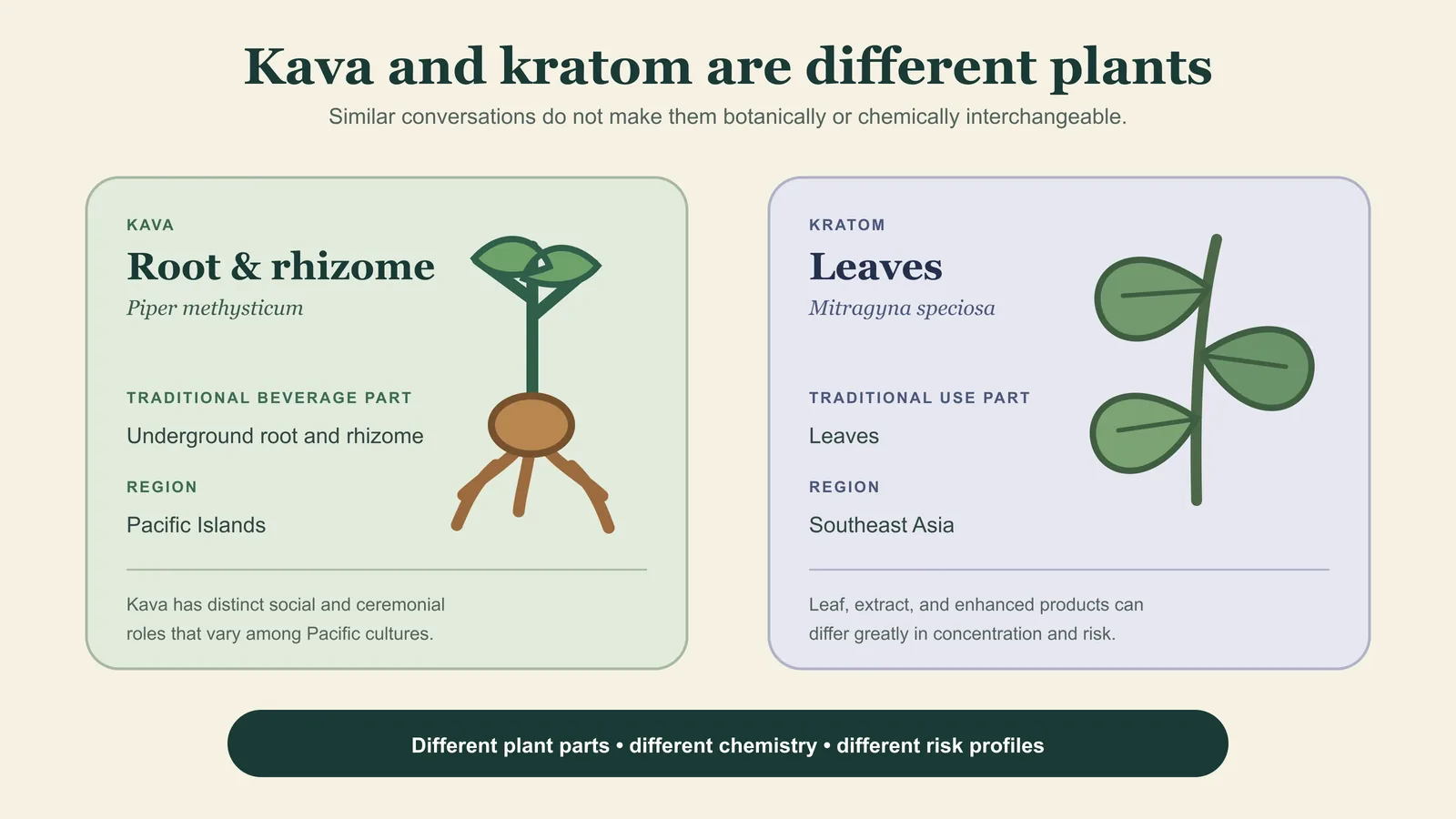
Kava and kratom are different plants from different regions with different histories and pharmacology. They are often sold in the same U.S. bars or shops, which can make them seem interchangeable. They are not.
| Question | Kava | Kratom |
|---|---|---|
| Botanical name | Piper methysticum | Mitragyna speciosa |
| Traditional plant part | Root or rhizome | Leaf |
| Traditional region | Pacific Islands | Southeast Asia |
| Common traditional form | Root material mixed with water and strained | Leaves chewed or prepared as tea in traditional contexts |
| Major discussed compounds | Kavalactones | Mitragynine and other alkaloids, including naturally low levels of 7-OH |
| Opioid receptors | Not generally classified as an opioid | Some alkaloids act at opioid receptors |
| Dependence concern | Appears lower, but not zero and not fully settled | Dependence and withdrawal can occur with regular use |
| Concentrated-product concern | Extracts may differ substantially from root-and-water beverages | Extracts and concentrated 7-OH products may differ sharply from botanical leaf |
What does kava generally feel like?
People often describe relaxation, reduced social tension, mouth numbness, and bodily calm. Dizziness, nausea, tiredness, and other effects can also occur.
What does kratom generally feel like?
Reported effects vary with product, amount, person, and expectations. Some people describe stimulation or increased energy; others describe sedation, pain relief, or opioid-like effects.
Those descriptions are not guarantees. Commercial labels such as red, green, and white do not reliably predict chemistry or experience.
Is kava an opioid?
Kava is not generally classified as an opioid. Its pharmacology is complex and not fully understood, but it is not the same as kratom’s opioid-receptor activity.
Is kratom an opioid?
Kratom is a plant, not a conventional prescription opioid, but some of its alkaloids act at opioid receptors. That is one reason kratom can produce dependence and withdrawal and why concentrated 7-OH products raise particular concern.
Which is safer?
There is no universal answer that applies to every product and person.
Kava carries concerns including rare severe liver injury, sedation, interactions, and possible compulsive use. Kratom carries concerns including dependence, withdrawal, liver problems, seizures, contamination, interactions, and serious outcomes—especially with concentrated products or other substances.
“Plant” and “tea” are descriptions, not safety certifications.
Can either help someone stop alcohol or opioids?
People report using both in that context, especially kratom for opioid withdrawal or cravings and kava as an alternative to alcohol-centered socializing. Research has not established either one as a safe and effective addiction treatment, and neither is FDA-approved for that purpose.
Personal stories can be true without becoming prescriptions for strangers.
The most important product distinction
Do not confuse traditionally brewed kratom leaf tea with concentrated 7-OH tablets, gummies, shots, or enhanced products. The FDA describes concentrated 7-OH products as potent opioid products and recommends that consumers avoid them.
That distinction does not make all leaf products safe. It means product form and concentration matter.
Next: why concentrated 7-OH is not ordinary kratom tea, or what is actually in that bottle. Short answers are on the questions page.